Emergency response & incident management
Coordinated support from the first notification through field response and recovery.
- Chemist-led Level 1 advice through NCEC
- Level 2 and Level 3 response coordination
- Hazard assessment and incident strategy

ESS–OURAY · Middle East
Integrated chemical emergency response, specialist technical services and recovery support for organisations operating across the Middle East.
Capabilities
ESS–OURAY programmes connect immediate chemical advice with incident mobilisation, specialist field services and the practical work required to move from containment to recovery.
Every scope is matched to the product, container, site, transport mode and operating environment involved.
Coordinated support from the first notification through field response and recovery.
Engineered solutions for unusual, reactive or high-consequence materials and situations.
Product recovery and controlled transfer between suitable containment systems.
Technical support for damaged, leaking or immobilised transport containers and tanks.
A structured route from incident waste characterisation to site recovery.
Preparation that gives teams a clear, usable response structure before an incident occurs.
Response pathway
A response programme is designed around the client's products, locations and escalation rules, so critical information moves with the incident from first contact to site recovery.
Review SDS data, operating locations, approval triggers, contacts and response plans.
Provide immediate, product-specific Level 1 chemical advice through trained chemists.
Define the field strategy and coordinate suitable people, equipment and technical support.
Manage transfer, waste, remediation, asset support and the route back to safe operation.

Transport incidents
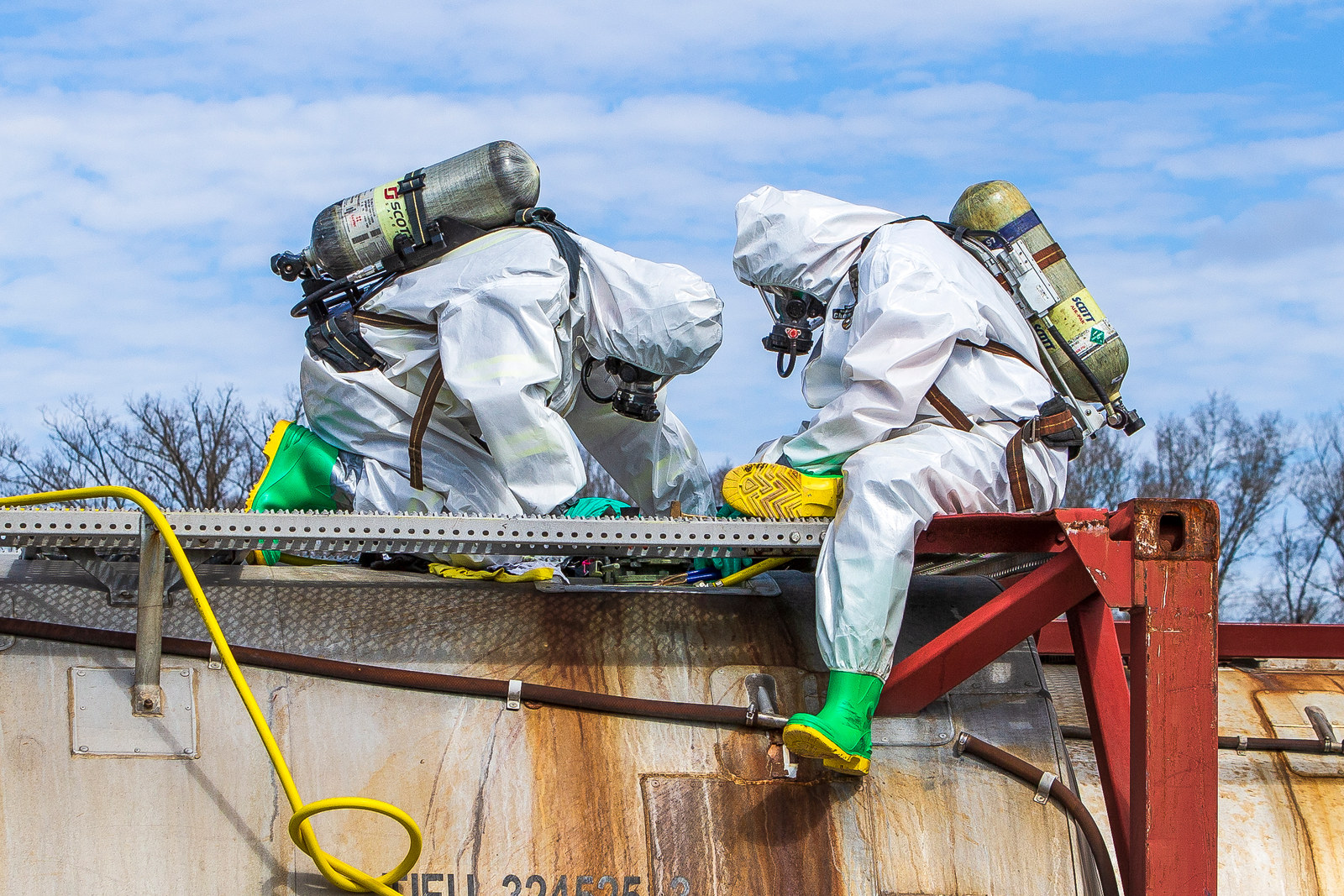
When a chemical consignment cannot safely continue its journey, the response may require far more than containment. ESS–OURAY can scope the technical steps needed to secure the asset, recover the product and support a safe return to service.
Technical scope is confirmed against the commodity, asset design, owner requirements, site conditions and applicable local standards.
Industries
Programmes can cover fixed facilities, transport movements, ports and marine operations, or a defined product portfolio across multiple locations.
Manufacturing, storage, processing, warehouses and specialist product operations.
Vessels, terminals, cargo areas and dangerous-goods movements through the marine supply chain.
Production, terminals, power, utilities and facilities handling fuels or process chemicals.
Road, rail and intermodal movements involving bulk, packaged and containerised materials.
Programme design
There is no credible one-size-fits-all chemical response plan. The programme is configured around the risks, decisions and operating conditions that are specific to your organisation.
Define the countries, facilities, routes and transport movements that need to be included.
Build the information set required for rapid, product-specific advice and decision-making.
Set contact routes, escalation thresholds and the people authorised to mobilise field support.
Develop additional response information for products with unusual behaviour or consequences.
Review existing arrangements and close practical gaps before they become incident problems.
Prepare operational teams to use the programme confidently under real incident pressure.
Start a conversation
Tell us about your products, locations and transport profile. We will help define the right scope for an ESS–OURAY capability discussion.
Request a capability discussionFor contracted response programmes, activation numbers and protocols are agreed during onboarding.